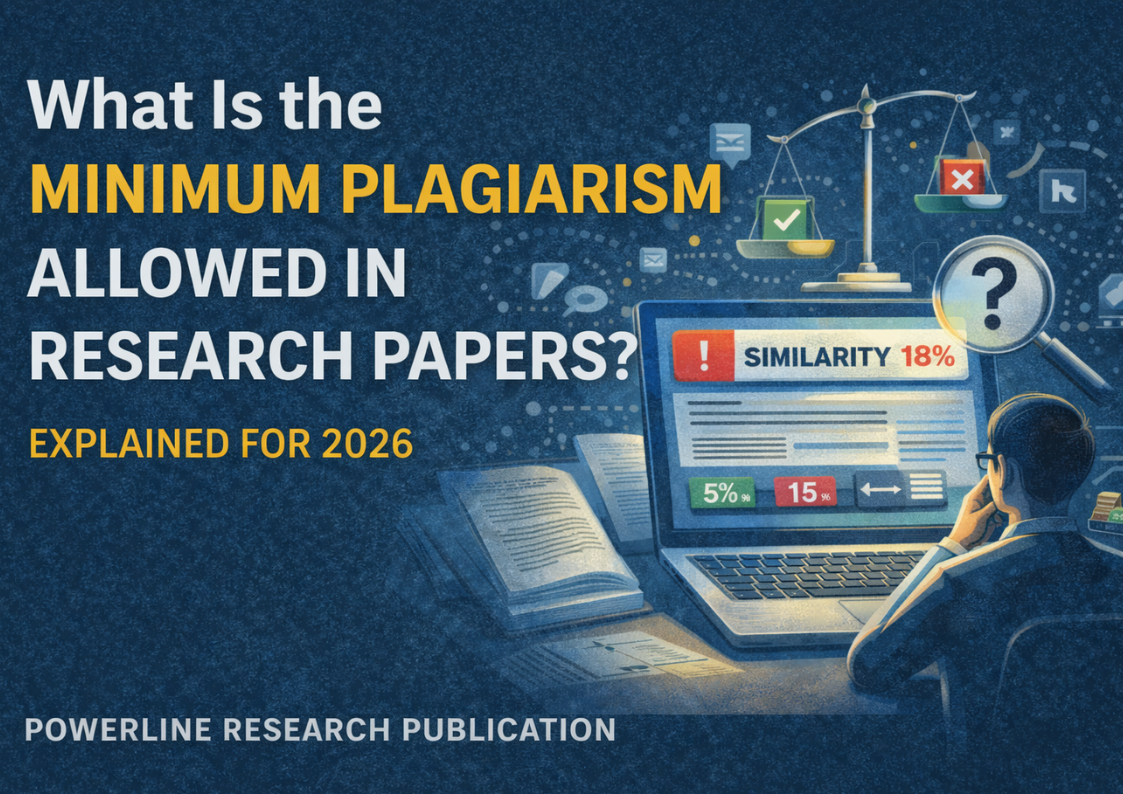
Plagiarism is one of the most critical ethical concerns in academic publishing. As universities, journals, and indexing agencies tighten their policies in 2026, researchers often ask an important question: What is the minimum plagiarism allowed in research papers?
The answer is not as straightforward as a single percentage. While similarity scores provide guidance, academic integrity depends on how similarity occurs, not just how much. This article explains plagiarism limits, similarity index expectations, and best practices to ensure your research remains ethical and publishable.
At Powerline Research Publication, we regularly guide researchers on plagiarism compliance to avoid rejection, retraction, or academic penalties.
Understanding Plagiarism vs Similarity Index
Before discussing limits, it is important to distinguish between plagiarism and similarity.
-
Plagiarism refers to presenting someone else’s ideas, data, or words as your own without proper citation.
-
Similarity index measures textual overlap with existing sources, often using tools like Turnitin or iThenticate.
A similarity report may show overlap due to references, methodology descriptions, or common terminology. Not all similarity is plagiarism.
Is There a Fixed Minimum Plagiarism Percentage?
There is no universal minimum plagiarism percentage accepted across all journals and institutions. However, in 2026, commonly observed guidelines are:
-
0–5% → Ideal and safest range
-
6–10% → Generally acceptable if properly cited
-
11–15% → Risky; may require revision
-
Above 15% → High chance of rejection
Many Scopus, Web of Science, and UGC-recognized journals expect a similarity index below 10%, excluding references and quotations.
Section-Wise Plagiarism Expectations
Most journals do not judge plagiarism purely on total percentage. They analyze where similarity occurs.
Introduction & Literature Review
-
Paraphrasing is essential
-
Citations must be accurate
-
High similarity here raises red flags
Methodology Section
-
Some similarity is acceptable due to standard procedures
-
Proper citation reduces risk
Results & Discussion
-
Similarity should be close to zero
-
Any overlap here is considered serious plagiarism
References
-
Usually excluded from similarity calculations
Journal and University Policies in 2026
Scopus & Web of Science Journals
-
Expect originality and ethical compliance
-
Often require similarity reports at submission
-
Excessive similarity may lead to desk rejection
Universities & PhD Regulations
-
Many institutions require:
-
Below 10% similarity for thesis submission
-
Zero plagiarism in core chapters
-

No comments yet. Be the first!