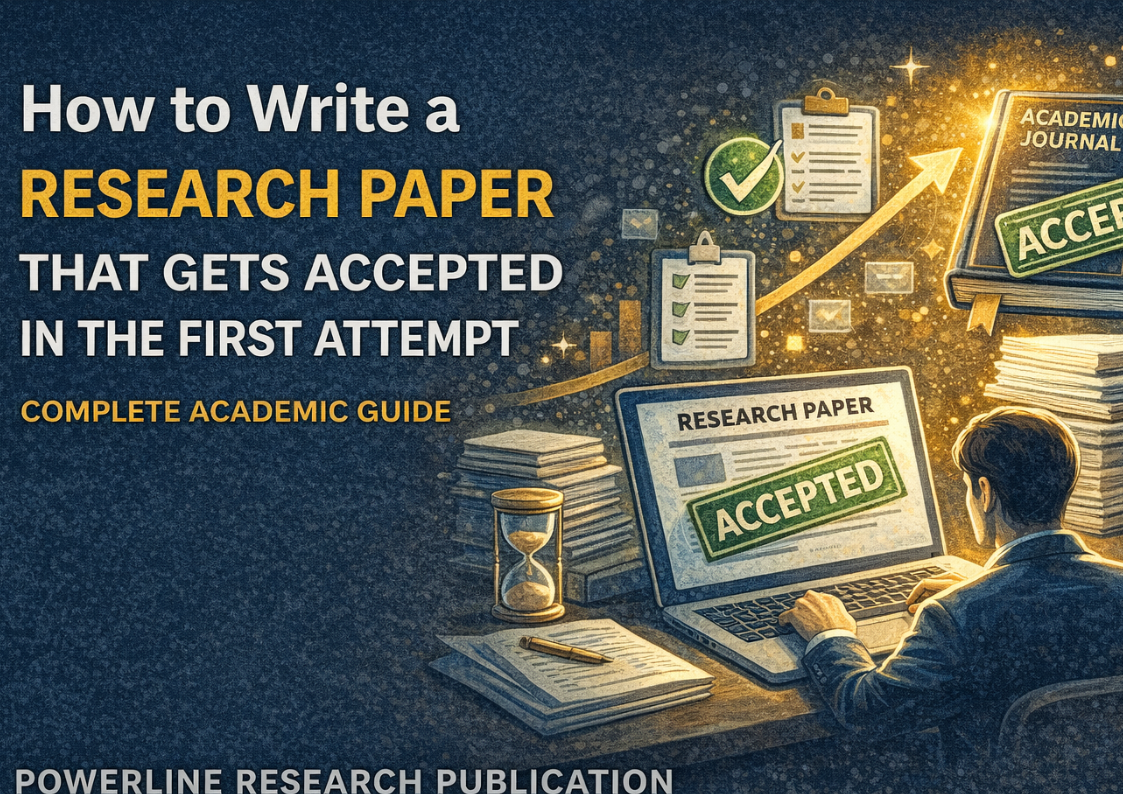
Publishing a research paper is one of the most important milestones in an academic career. For PhD scholars, researchers, and faculty members, getting a paper accepted in a reputed journal not only strengthens academic credibility but also contributes to professional growth, research funding opportunities, and academic promotions. However, many researchers experience multiple rejections before their work is finally accepted.
The truth is that most research papers are not rejected because the research is poor. In many cases, the rejection happens due to avoidable mistakes such as weak structure, poor journal selection, lack of clarity, formatting errors, or failure to meet the journal’s expectations. When researchers understand how the publication system works and prepare their manuscript carefully, the chances of first-attempt acceptance increase significantly.
Writing a research paper that gets accepted in the first submission requires careful planning, clarity in writing, proper journal selection, and adherence to ethical publishing standards. This guide explains the key strategies researchers can follow to improve their chances of getting their paper accepted on the first attempt.
Understanding What Journals Actually Look For
Before writing a research paper, it is important to understand how editors and peer reviewers evaluate submissions. Journals receive hundreds or sometimes thousands of submissions every year, but only a small percentage of them are accepted. Editors generally look for manuscripts that present original research, provide clear contributions to the field, follow proper research methodology, and are written in a clear and professional academic style.
Peer reviewers focus on whether the study answers a meaningful research question, whether the methodology is appropriate, and whether the conclusions are supported by data. Reviewers also evaluate the logical flow of the paper and check whether the literature review properly connects the current study with previous research.
A paper that demonstrates clarity, relevance, originality, and strong academic writing immediately creates a positive impression during the review process. Researchers who understand these expectations from the beginning are better prepared to write manuscripts that meet journal standards.
Choosing the Right Research Topic
One of the most important decisions in academic publishing is selecting a strong research topic. A well-chosen topic increases the probability of acceptance because it demonstrates relevance and originality. Journals prefer studies that address current problems, introduce new methods, or offer fresh insights into existing research areas.
Researchers should begin by carefully reviewing recent publications in their field. Reading recent journal articles helps identify research gaps, unanswered questions, or emerging trends. When a paper addresses a clear research gap, reviewers are more likely to see the value of the study.
A strong research topic also needs to be specific and focused. Broad or vague topics often lead to weak research questions and unclear conclusions. When researchers clearly define their objectives and scope, the entire research paper becomes more structured and convincing.
Conducting a Strong Literature Review
The literature review plays a critical role in establishing the academic value of a research paper. It demonstrates that the researcher understands existing knowledge in the field and is capable of positioning the new research within that context.
A well-written literature review does more than summarize previous studies. Instead, it analyzes and compares different research findings, highlights limitations in earlier studies, and explains how the current research contributes new insights. When reviewers see that the author has thoroughly explored the existing literature, they gain confidence in the credibility of the study.
Researchers should rely primarily on high-quality academic sources such as peer-reviewed journal articles, reputable academic books, and conference papers. Using reliable and recent references strengthens the foundation of the research paper and demonstrates academic awareness.
Developing a Clear Research Methodology
One of the most common reasons research papers are rejected is weak or unclear methodology. The methodology section explains how the research was conducted and why the chosen approach is appropriate for answering the research question.
Editors and reviewers expect researchers to clearly describe their research design, data collection methods, sampling techniques, and analytical procedures. If the methodology is unclear or poorly explained, reviewers may question the validity of the results.
A strong methodology section should allow other researchers to replicate the study. Transparency in research methods not only improves credibility but also strengthens the overall academic quality of the paper.
Researchers should also ensure that their methods align with the research objectives. Whether the study uses qualitative methods, quantitative analysis, experimental designs, or mixed approaches, the methodology must logically support the research goals.
Writing a Strong and Clear Abstract
The abstract is often the first section editors and reviewers read. In many cases, it determines whether the manuscript will proceed to full review or face an immediate desk rejection.
An effective abstract clearly summarizes the purpose of the study, the methodology used, the main findings, and the overall contribution of the research. It should be concise yet informative, typically ranging between 150 and 250 words depending on the journal guidelines.
Researchers should avoid vague or overly complex language in the abstract. Instead, the goal should be to communicate the significance of the study clearly and efficiently. A strong abstract creates interest and encourages reviewers to explore the full manuscript.



No comments yet. Be the first!